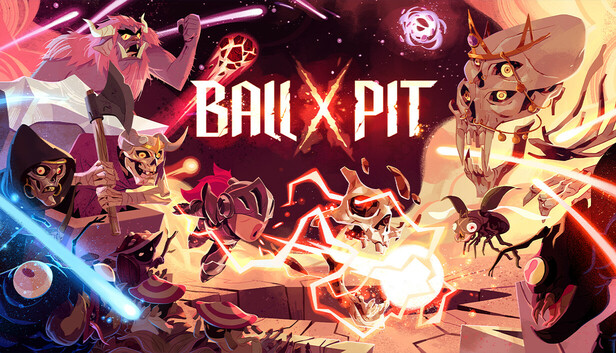
BALL x PIT is my favorite game of 2025. A lot of other people think so too because it is sitting at over 15,000 reviews. I like it because it has that juicy slot machine animation when you get a ball behind a line of enemies, it has that one-more-turn loop, but also because it is a perfect example of how making a game that is perfectly calibrated to appeal to the Steam player base can also be innovative, new, and creative.
In today’s blog I want to go a bit out of my comfort zone and examine the game design elements that make this game so fun and examine what it means to “chase trends” and try to show you that studying the types of games Steam players love isn’t a bad thing.
Chasing trends!
When I say BALL x PIT is the type of game Steam wants I can already hear the commenters: “That’s chasing trends!”
“Chasing trends!” is one of the most immediate reactions whenever I list out popular genres that the Steam audience is looking for. The assumption is that I am recommending that creative inspiration be suppressed, and the only way to “riches” is to crassly copy the most recent viral hit and to market test every creative decision. Originality is out! Copying “viral” hits is in!
That is not my intention. In reality “chasing trends” is just a pessimistic way of saying “being inspired by the artistic milieu.”
As artists you need to be aware of the creative waters you are swimming in.
And Kenny Sun, the developer of BALL x PIT, is swimming, swan diving, and basically doing an Esther Williams impression in the creative waters we find ourselves in. BALL x PIT is proof that knowing what the Steam audience wants does not mean you have to make a derivative game. It is freeing. Consider the (likely apocryphal) Leonardo Da Vinci quote “Art lives from constraints and dies from freedom.”
Kenny’s constraints
I asked Kenny where he got his inspiration for BALL x PIT
The main inspiration [for BALL x PIT] is a free-to-play mobile game called Punball.”
- Kenny Sun
You should try it. It’s free. Here is a screenshot:
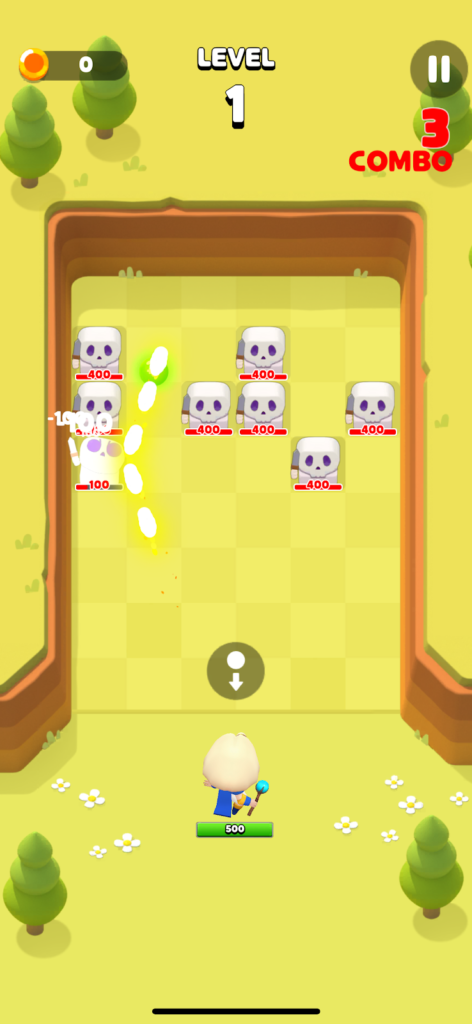
Punball is a mobile-ass-mobile game. It is turn based, tons of timers and energy bars that can be unlocked if you buy some in game currency. Super casual. Everything looks like it is made out of a fondant covered cake.
If you were to “port” Punball onto Steam, the audience would destroy you. They can smell a mobile port from 100 miles away. Instead, you must pick the core mechanics and translate them to the Steam player language.
I asked Kenny if he was inspired by the classic Steam roguelites that have been so popular the last decade:
I studied Vampire Survivors, Peglin, and Loop Hero a bit but mostly played them for fun.
Kenny Sun
If you have played any of these roguelites you can clearly see their influences on Kenny. Let me detail them here.
Creative Lineage
The reason I am so impressed by BALL x PIT is how seamlessly Kenny blended so many distinct games into a gameplay system that loops back on itself and supports the mechanics so well. It is a masterclass in game design.
Let’s look at the trending genres Kenny “chased” and then see how he blended them together so seamlessly.
Arcade-lites
Simple coin-op-style-arcade games are dead on arrival for Steam. They are too simple. “Score chase” and leaderboards just don’t motivate players to keep playing.
Instead, many developers have found success by grafting the rogue-lite game loop with random upgrades onto those classic arcade games. Here are few examples
- Snake was adapted in SNKRX
- Claw machines adapted in Dungeon Clawler
- Asteroids / Space war adapted as Nova Drift (my analysis here).
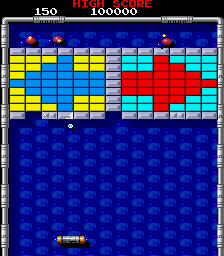
BALL x PIT is a very clever adaptation of the classic ball bouncing Arkanoid (again as refracted through Punball).
Vampire Survivors
Key innovation adapted from the Vampire Survivors: defeated enemies drop crystals and when they are collected, it fills an experience bar, then when full, you are prompted to pick one of three upgrades.
Here is how it appears in BALL x PIT
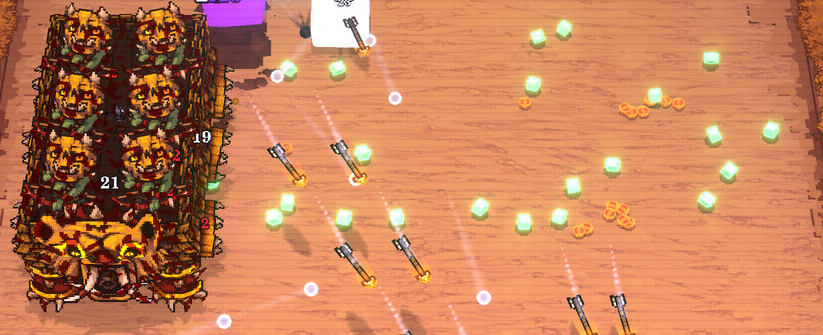
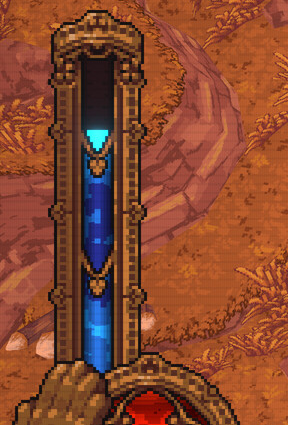
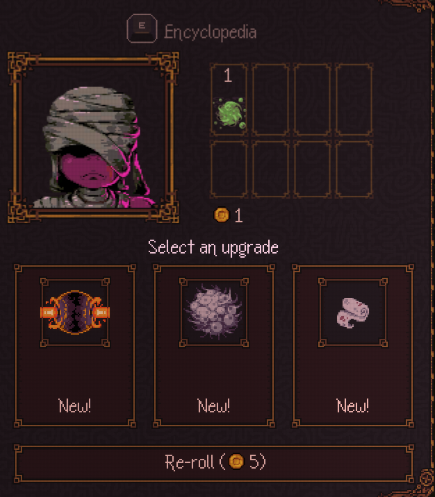
Also BALL x PIT kind of plays itself. You don’t need to constantly TAP TAP TAP like a SHMUP to shoot. Just move around the screen and destroy. Even the BALL x PIT hoard resembles the mobs that swarm you during a Vampire Survivors run.
Peglin
Key innovation adapted from the Peglin: During runs you randomly are given orbs which have unique special abilities that must be managed for strategic gains.
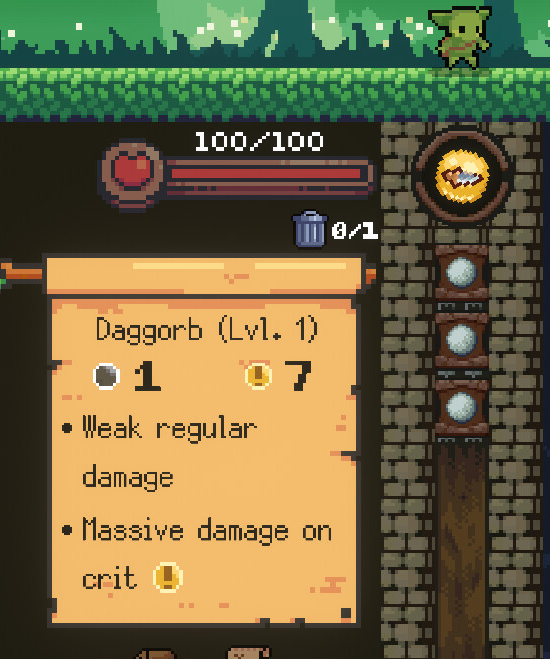
Here is how it appears in BALL x PIT
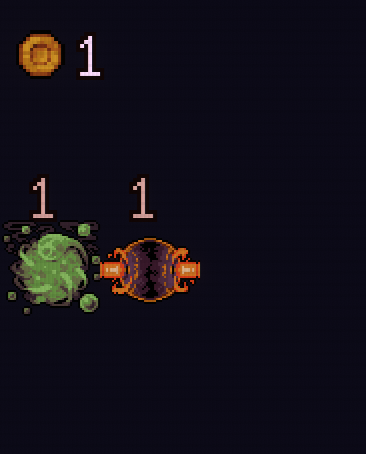
When at the BALL x PIT upgrade screen, if you select a “Ball” as your upgrade it is added to your inventory and at a regular interval it is fired out at the approaching enemies.
BALL x PIT’s orbs also have their unique abilities that can be upgraded.
Loop Hero
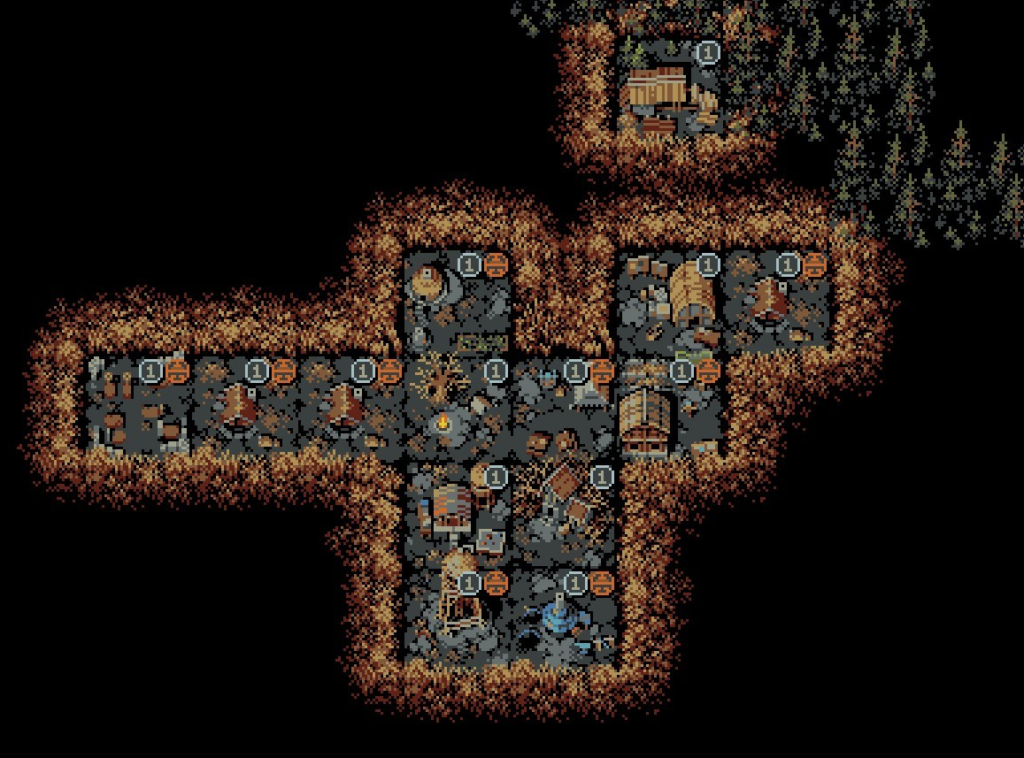
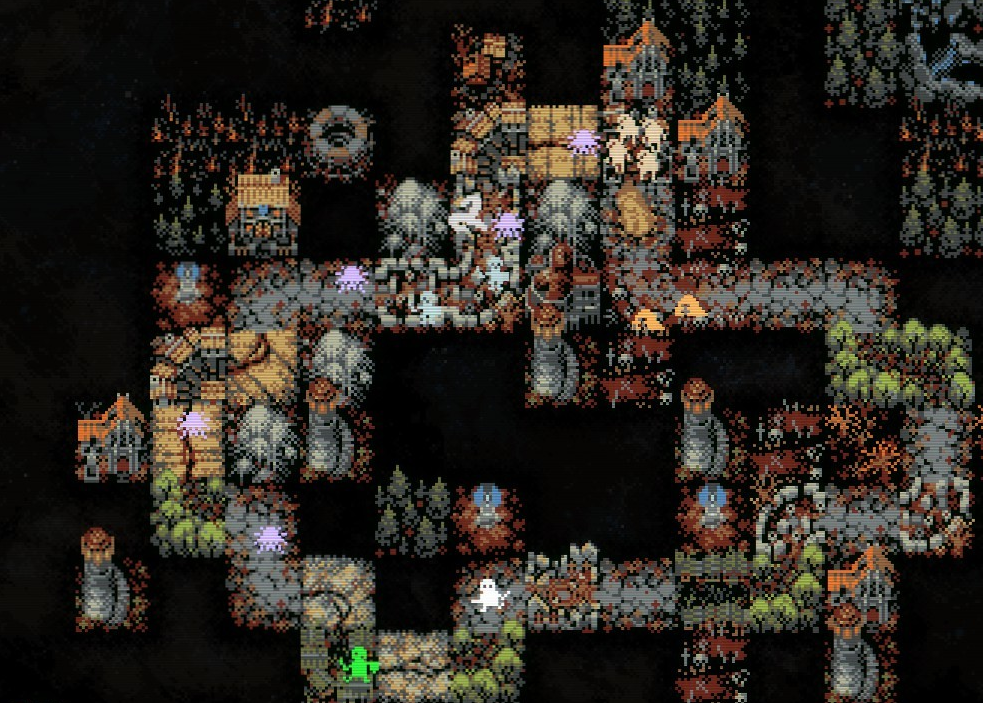
Key innovation adapted from Loop Hero: After every run you spend your loot on building a village that provides additional resources and buildings that unlock unique characters and stat boosts.
How BALL x PIT adapted it:
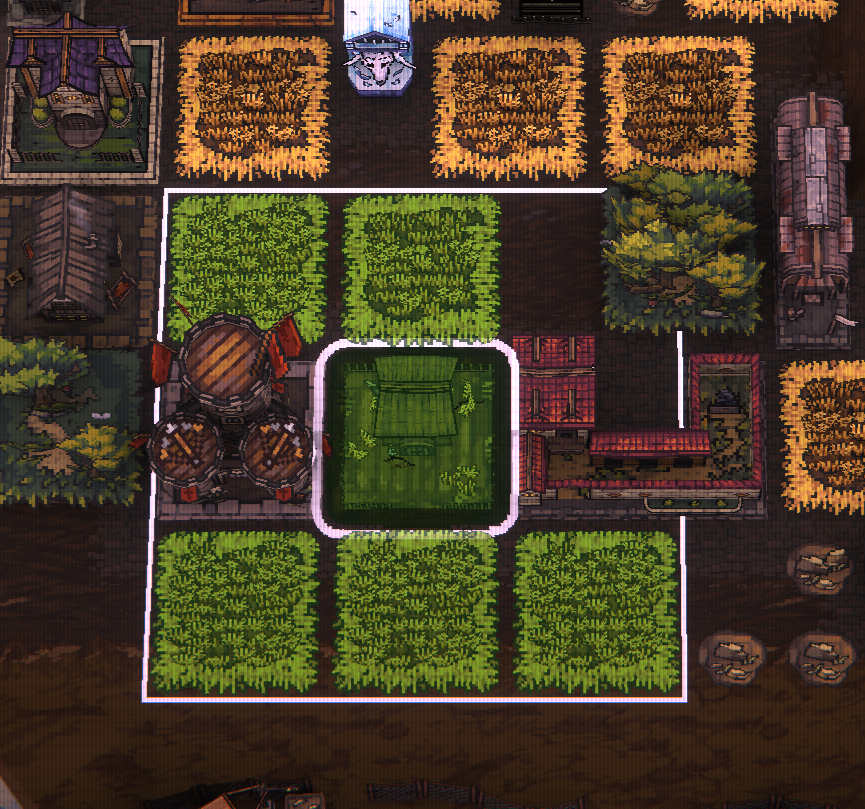
After every run, you can spend your collected resources on a Base. At that base there are adjacency bonuses, upgrades, and status buffs that each piece of terrain contributes to your individual runs.
For instance, this Farm piece gives a bonus for every wheat field in proximity. BALL x PIT innovates on this though and has a clever call back to the central mechanic where flinging your heroes and ping ponging them around the village is how resources are gathered and upgrades are dispensed. CLEVER!
Genre mixing is bad though?
Yes, I think genre mixing is bad. Well it is risky. I think indies do it too much and they end up with games that alienate the fans of both of the genres they are mixing. Here is a full explanation.
I don’t think BALL x PIT is a genre mix, despite all the games I listed above. BALL x PIT is firmly an arcade rogue-lite based on Arkanoid.
From the Steam page I think this is the best summation of the game:
“BALL x PIT is a fast-paced fantasy roguelite where heroes must find the balls to plunge deeper into a seemingly bottomless pit of monsters. Develop arcane ammunition and resources in pursuit of treasure, recruiting additional heroes to aid you in your perilous quest.”
BALL x PIT “more like this” section
It doesn’t try to list every genre. It is just the central core one.
I don’t actually think BALL x PIT is mixing genres. Instead Kenny is just sprinkling mechanics from other games like spices. He is not trying to advertise that his game is a mix of other popular games. He used his extensive experience playing indie games to grab ideas that help fix his own game.
Many indie game developers working on their first self-developed games typically have AAA syndrome where all their inspiration comes from AAA games. If your solution to a design problem is to think “What did they do in Darksouls?” You need to play more indie-scale games. AAA games typically rely on mechanics like puzzles or complex level design that requires a lot of graphical assets. That won’t work for our budgets.
This is why I advise understanding what the top indie games are and “chase” them down and play a lot of them. You will internalize the more clever mechanics that don’t rely on huge AAA budgets. What games should you play and internalize? I wrote a whole blog post about the games that will cure you of your AAA-brain.
Grim dark graphic style
One more time, let’s look at that mobile game Punball that inspired Kenny Sun:
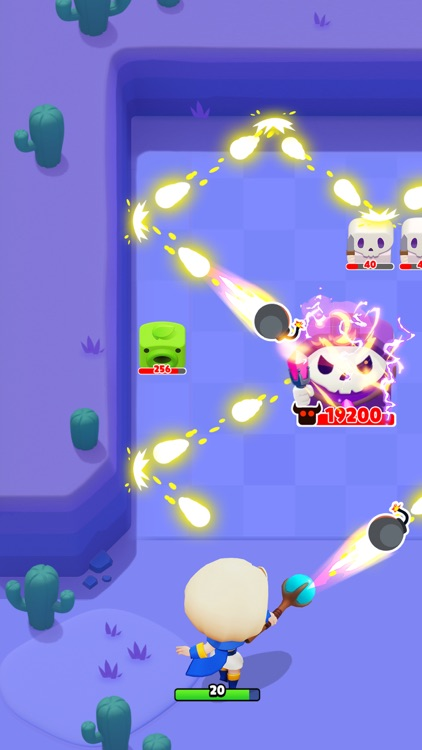
Yes, it’s cute, but Steam players would hate this so much. This is not the Steam aesthetic.
Wisely, Kenny went with a gritty, desaturated, grim-dark graphic style.
This is Steam’s style:
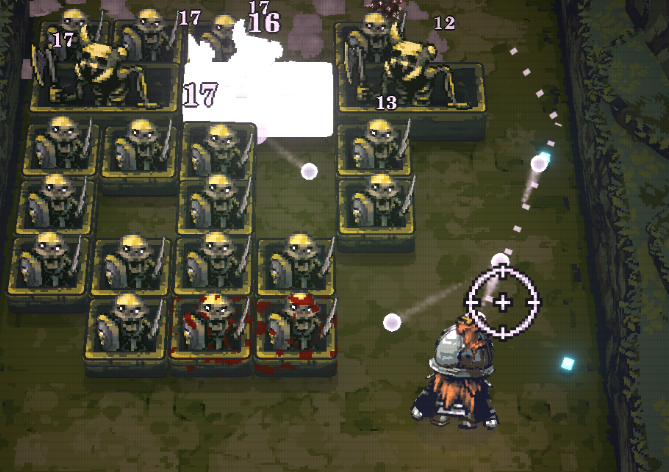
BALL x PIT has bloody, rotting skeletons, with broken horns, holding rusty swords and battleaxes, and numbers flying all over everything. Steam likes it DAAAAAAANK.
Kenny has released many games on Steam. They look great and are innovative…. but they just weren’t the right aesthetic for a critical mass of Steam players. The top performing game (Mr. Sun’s Hatbox) had 477 reviews.
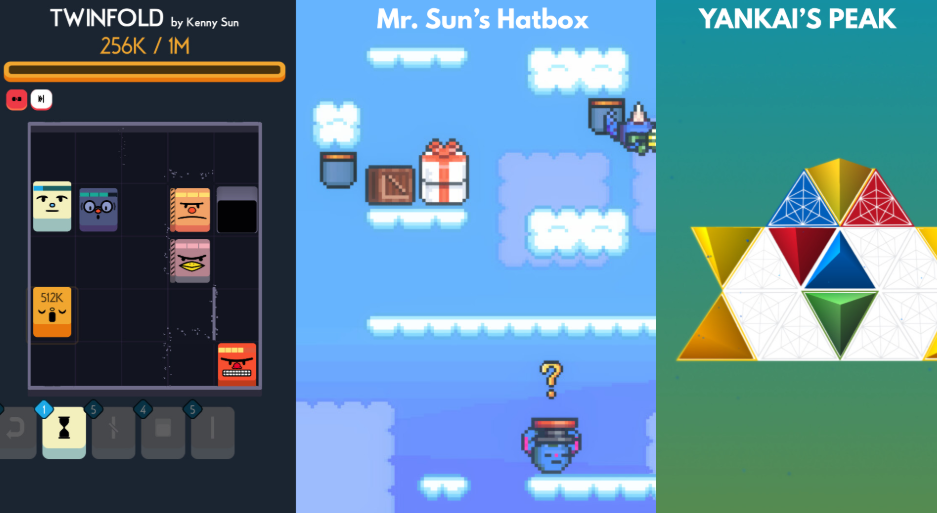
It’s not a coincidence that BALL x PIT is Kenny’s most successful game because it is also his darkest.
The change in color palette is mostly because I had the budget to hire a team and had a bit more freedom to make something that aligns a bit more with my tastes.
Kenny Sun
Who did his art?
One of the artists is Sergio ‘Bini’ H. Alcelay who is a member of the Brainwash Gang – a collective of Spanish developers who have made some seriously gritty games. It is a smart collaboration.
Please folks, Steam players like it gritty, dark, gross. I have reviewed many of your Steam pages and they are way too cute. Way too bright. And not enough blood and/or skulls.
Steam’s favorite gameplay loop
Last year I wrote a blog post about the preferred difficulty level of Steam games. I argued that they like games that are “Easy, Hard, Easy.”
In other words, the core 10-second gameplay loop is easy. The 10 minute loop is hard. The 10+ hour loop makes the 10 minute loop easier.
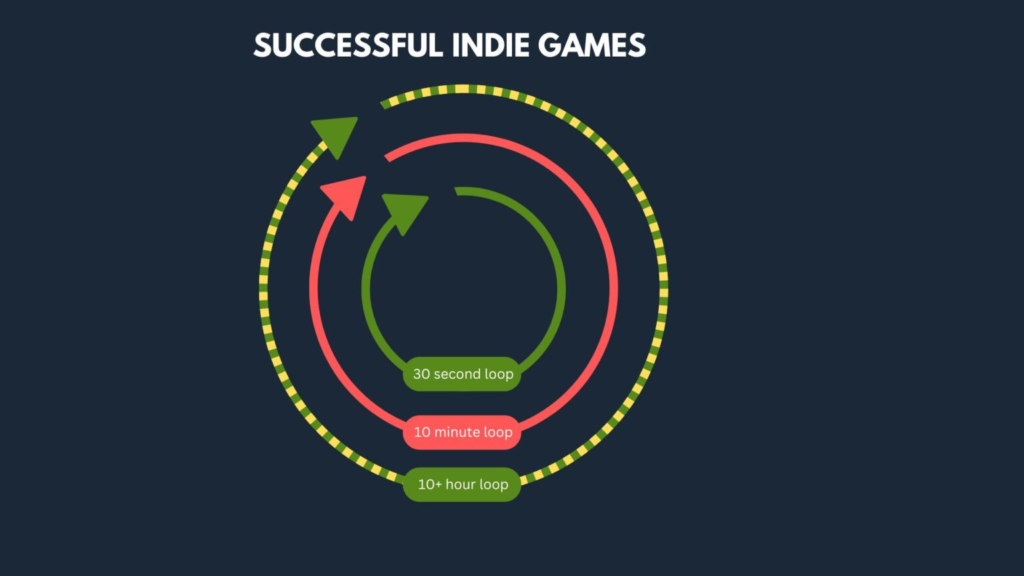
BALL x PIT matches this game loop almost down to the minute.
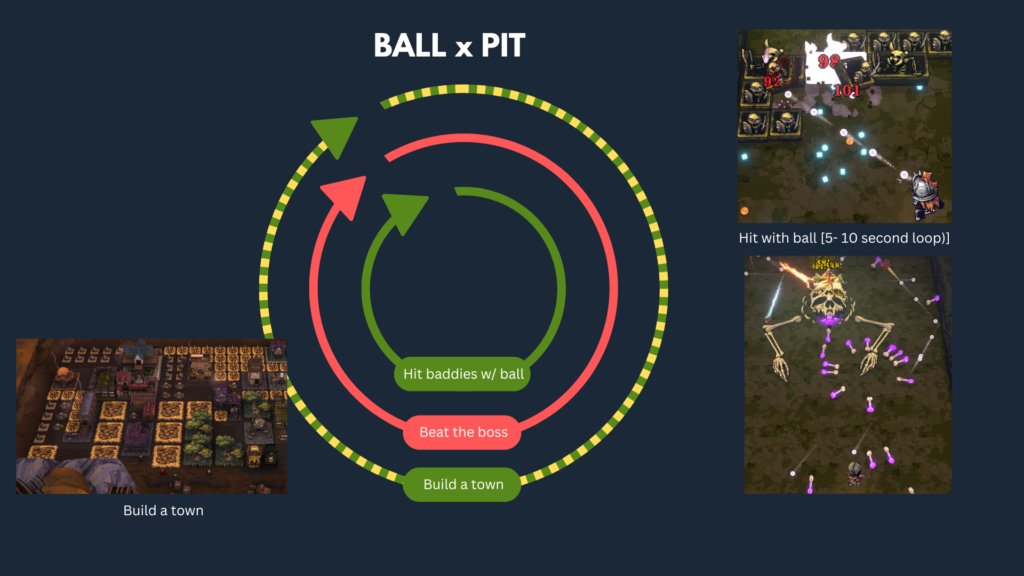
Let me explain:
EASY: The 10-second loop
Your character at the bottom of the screen automatically spits a volley of Balls at the advancing army.
At the second-to-second level, BALL x PIT is MUCH easier than its distant arcade ancestor Arkanoid. In BALL x Pit you don’t lose the round if you don’t catch the ball at the bottom of the field. Instead, the ball is quickly added back to your inventory and ready to be fired again in a few seconds. If you do catch the ball, sometimes you get a bonus, but that really isn’t critical to winning. Also, you don’t have to constantly click the shoot button. Everything shoots automatically, just like Vampire Survivors.
So all you really have to worry about is moving left and right. And sometimes up and down. Sometimes enemies shoot at you, but you have tons of health so one arrow hit isn’t the end of the round.
In the short run, BALL x PIT combat isn’t Dark Souls. It doesn’t take much dexterity. You basically have 4 buttons to worry about: Up, Down, Left, Right.
In fact, even if you wanted to be agile, the late game makes it hard. By the end of the run, your character is firing so many upgraded balls and baby-balls, and particle effects, you can’t actually see what’s going on. You mostly just let go of the controls and let the game automatically blast its way to the finish.
HARD: The 10 Minute loop
A typical BALL x PIT run is 10-28 minutes.
This is where the game is hard (at first).
At the beginning you don’t have many power ups so your balls don’t do much damage. Your characters default stats are weak. You quickly get overrun by enemies.
It took me 4 runs (about 1.5 hours of gameplay) to defeat the first level boss. Then it took me another hour of gameplay to beat the first level with a second character so I could get enough resources to advance to the second level.
This part of the gameplay loop is tricky and where the real challenge is.
EASY: The 10 Hour loop
After each run (whether you succeeded or failed), you are dumped back to the base where you can buy new buildings, upgrade them, or harvest resources. It takes forever to fully upgrade your base. You quickly run out of resources buying buildings and you can only harvest resources once in between runs of the HARD loop. The 10 Hour Loop is a bit of a grind. It is kind of like an idle game.
The purpose of the 10 Hour loop is to make the 10-minute loop easier. For instance, I just built and upgraded a Barracks which gives every character (and every run) a +5 Strength Bonus.
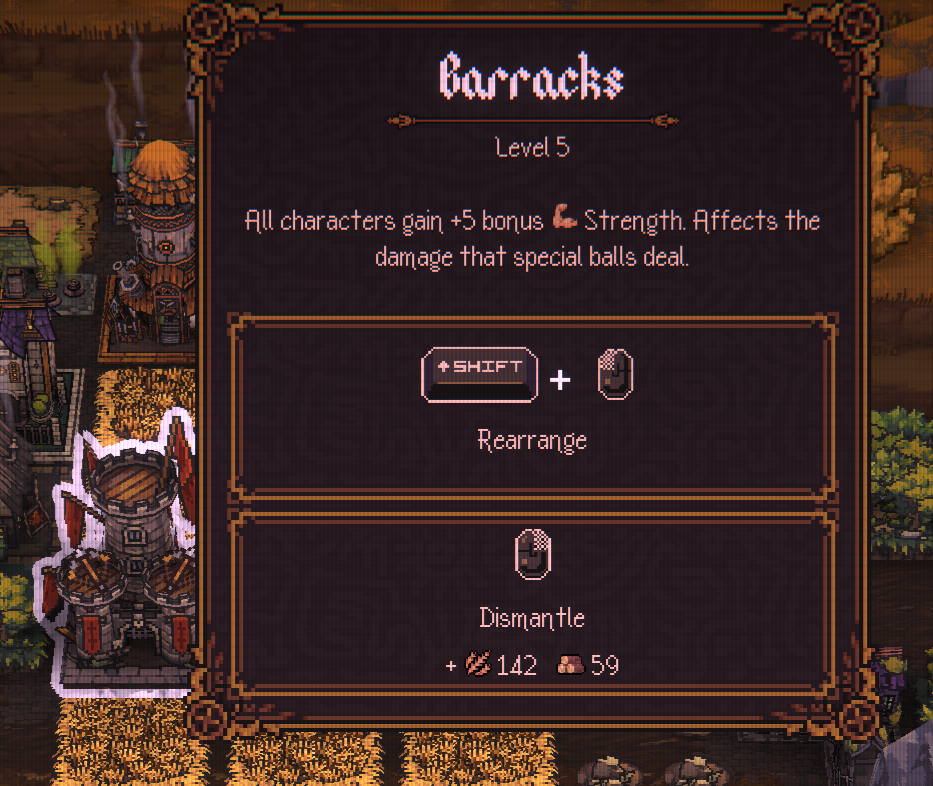
My next 10 minute run is therefore easier because of this upgrade. I can beat more enemies, do better on the boss and get further.
THIS 10 hour loop is the reason why successful indies often make rogue-lites in general and this Easy-Hard-Easy loop specifically. It makes balancing the game so much easier.
There are so few successful puzzle games because they are so hard to balance. If just one puzzle is too hard, the player’s progress comes to a screeching halt. Similarly in a linear game, if a boss is too hard, the player is stuck until they “get gud”
The rogue-lite 10 hour loop provides a built-in autocorrection that matches the player’s skill. Good players can easily get through the 10-minute loop faster. Medium skilled players might have to grind a bit at the 10-hour loop more but eventually level up their players enough to progress. Low-skill players grind and grind but eventually upgrade their base and characters enough that they can easily beat the different levels. Players grind as much as they need to for their skill level. AUTOMATIC!
Similarly there is a bit of randomization that comes from each run, so sometimes you get a very very good set of upgrades that lets you progress before your skills are there. That makes players feel good because they were able to “trick” the game they were struggling with. It is like a slot machine that paid out and you got money you didn’t work for.
The 10-hour loop also introduces additional playable characters that each have their own unique ways of playing the base game. One such character is a married couple that fires two balls in different directions. Another character auto-picks upgrades for you. These additional playable characters greatly multiply out the game’s median play time. Because of all the extra characters I want to replay every level and get that green checkmark for each of them.
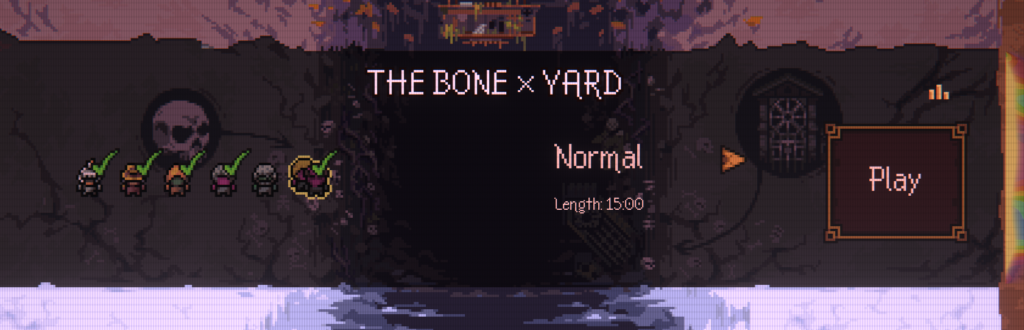
Roguelites are good for indies to make not just because they are popular but because their inherent game design smooths over the hardest parts of development: difficulty balance and providing enough content.
For narrative adventure games, on the other hand, you can spend a week designing and implementing a puzzle that can be solved in 5 minutes. For a roguelite you can spend a day adding a couple of new characters and expand gameplay by 20 more hours.
You aren’t chasing trends
I hope that this deep dive into BALL x PIT’s lineage and game design shows that successful game developers aren’t blindly chasing what is popular. Instead successful devs are soaking in the indie gaming culture and looking at where genres should be expanded and what should be abandoned. Successful devs twist the hits, reconfigure them, recombine them.
If you blindly copy a game, Steam players will know. They will yell at you.
This is why I really don’t like it when fellow developers bad mouth others for “Chasing Trends.” Successful devs aren’t using market research at the expense of creativity. Instead, they are just perceiving what the general Steam audience is super excited for and then figuring out how to make more of it. Devs shouldn’t be afraid to stick close to what is working and find innovation that is one step ahead of the current vanguard.
Just because you are influenced by another game, doesn’t mean you are shamelessly cloning a hit hoping for similar success. BALL x PIT feels innovative. There is some incredibly clever meta design that works on multiple levels. I clearly see the influences, but I can also see innovation.
Side note: But you said Great Conjunction games were popular?!?
BALL x PIT is not a Great Conjunction game. The lead developer Kenny Sun said in an interview that he has been working on the game’s concept since 2021. It is a deep, complex game that takes a long time to develop. So yes. Long in development complex games like BALL x PIT can still do well. AAAND silly idle games or friendslop games can do well. Both are true.
That is why I think we are in a bit of a golden age. Fast-produced games like Grand Conjunction games can do well, but so can deep deep games like BALL x PIT. There are several ways to succeed.
If you are making your first game though, I think Great Conjunction genres are a great way to start. So please check out this blog post on what they are.
BONUS: Arcade games to chase
Other arcade games that would make perfect rogue-lite adaptations for which I haven’t seen a successful attempt yet:
- Space invaders
- Centipede
- Dig Dug (maybe Dome Keeper counts)
- Missile Command (maybe Dome Keeper counts for this too)
- Tapper
- Frogger