This is the second installment in my blog series about the new Golden Age of games.
Valve just revealed its Best Sellers list for July 2026 and all this week I am looking at some of the games that made this list that had short development times. These are the “great conjunction games.”
Last blog I looked at Sir, We Have an Orc Problem.
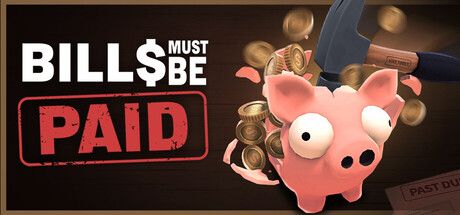
Today we are looking at Bills Must Be Paid (BMBP)
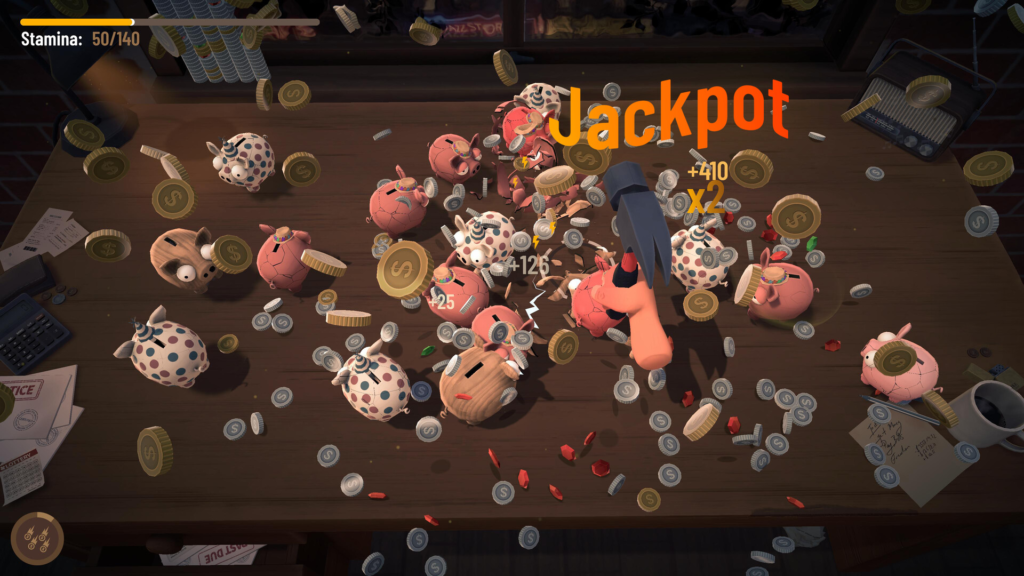
The game is an incremental game where you destroy piggy banks with a hammer to earn money. The structure is in the Node-buster sub-sub-genre of incrementals where you destroy objects in a limited amount of time; but the loop evolves as you buy upgrades to increase the damage you do, the time you have, and the amount you earn.
- Team size: 2 developers (Roxy & Mike Co-Founders of Rike Games)
- Dev time: 7 months January – July 2026
- Game announce: February 14th, 2026
- Demo launch: April 21st, 2026
- Game launch: July 29, 2026
- Price (Discount): $6.99 (30% = $4.89)
- Genre: Incremental Node-buster-like
- Paid marketing: $200 in Reddit ads which earned 19 tracked wishlists
Benchmarks: overall assessment: 🥇 tier ranking on several metrics
- Wishlists at Page Announce (65 days / 2 month): 528 wishlists (11 – first day, 250 after 1 month) 🥈
- Wishlists at Launch: >61k wishlists 🥇
- Demo median play time: 36 minutes 🥈(almost gold at 38 min)
- Steam Next Fest: June 15th (Entered with 15,623 wishlists): Earned 7,000WL 🥇
Sales wins:
- Earned $163,842 in the first 24 hours 💎
- Sold 330,000 units in the first 20 days. 💎
- Reached “Bronze Tier” in the Steam July 2026 sales ranking.
Slow until the demo
If you look at their benchmarks, the game was actually not doing that well at the game announcement and launch of their Steam page. This is why you shouldn’t freak out too much about the first 14 day benchmark. I only report that metric because every day someone asks on reddit “I just launched my Steam page and earned XX wishlists is that good?”
Just chill out and get back to work.
However launching their demo was what really turned things around. They only had 500 wishlists after 65 days of pre-demo marketing. But then, at the demo launch, they got 340 CCU immediately which propelled them onto the Trending Free charts.
Only truly worry about your wishlists after you have launched a demo.
Personal Calendar
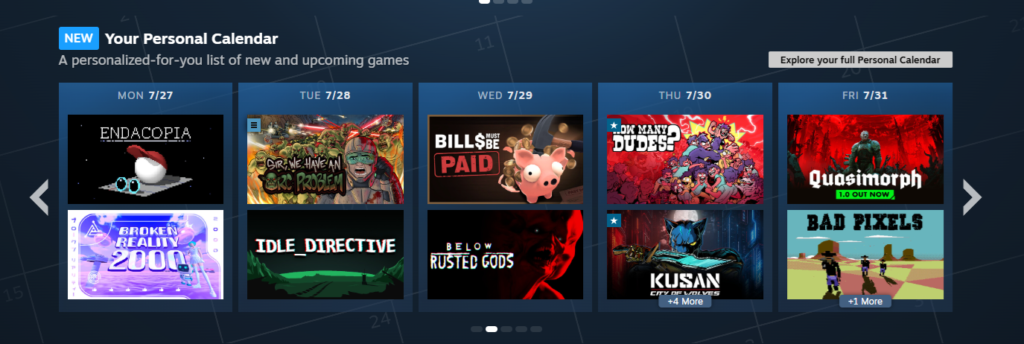
BMBP is a great test case for measuring the effectiveness of the Personal Calendar because their tenure in the widget extended across the 2026 Steam Summer Sale. Which is interesting because the personal calendar was taken off the front page during the sale. People could still use the Personal Calendar, but it took a couple clicks for them to get to it:
| Date Range | Wishlists earned | Avg Wishlists / Day | Note |
| June 13-24 | 9,147 | 831/day | |
| June 25-July 9 | 5,934 | 424/day | 2026 Summer Sale |
| July 10-28 | 30,975 | 1720/day |
As you can see, when Personal Calendar is off the front page, wishlists per day dropped in half. Scary, yes, but actually isn’t as bad as I thought. I would have expected a 90% drop. That means that a lot of people still know how to get to and use the calendar despite it not being right there on the front page.
Note: The team set their release date on June 13 a full month and a half early. This is great. You should all be setting your launch date as early as your development will allow to maximize your time on this tool. (You are paying Valve 30% of your revenue! You MUST pry EVERY.SINGLE.BENEFIT out of their greedy little claws.)
Other note, the team estimates that the final 31 days of their marketing campaign they earned over ~40k wishlists. But, that also includes Next Fest where they earned 7,000 wishlists.
The day after launch (Thu, Jul 30) they earned 21,461 wishlists.
One final final note, I think the other reason they did so well on the Personal Calendar is this capsule. Look at that. How can you not click that?
Not their first game
The team has been making games for 7 years. Mostly mobile and web games.
What did the team learn from making a lot of games?
The biggest lesson is that the idea matters more than anything else. You can polish, market and optimize a game forever, but if the core idea isn’t interesting enough, it’s very hard to compensate for that. All the experience from the previous games helped us execute it better. We think one of the most important parts of making a successful game is the fantasy and the “why am I doing this?” for the player.
- Mike
The first game they released on Steam was No Pain No Gain. They had the same marketing plan as BMBP: social media, then demo release, then next fest. But the results were totally different. The demo launch was not as exciting as Bills Must Be Paid. It floundered and they went into Steam Next Fest with only 1100 wishlists.
The most important marketing decision is the type of game you make. You can run the exact same marketing playbook, but if the game doesn’t have IT, there isn’t anything you can do to save it.
Chasing trends
Do they consider themselves chasing trends?
No, we just like making “games with upgrades”. Saw a bunch of small games with a skill tree finding success, so instead of buttons or upgrade menus we decided to put a Skill Tree in our game. So we wouldn’t call it trend chasing but getting inspired by others.
- Mike
Analysis
In my writeup for Sir, We Have an Orc Problem I mentioned that they innovated by increasing one variable by 10,000. I think the key innovation with Bills Must Be Paid was just taking a standard incremental and making it have great 3D graphics and great game feel. BMBP really looks so much more advanced and much more polished than all the other pixel-art incremental games (I swear I love Pixelart but Reddit and social media love 3D games).
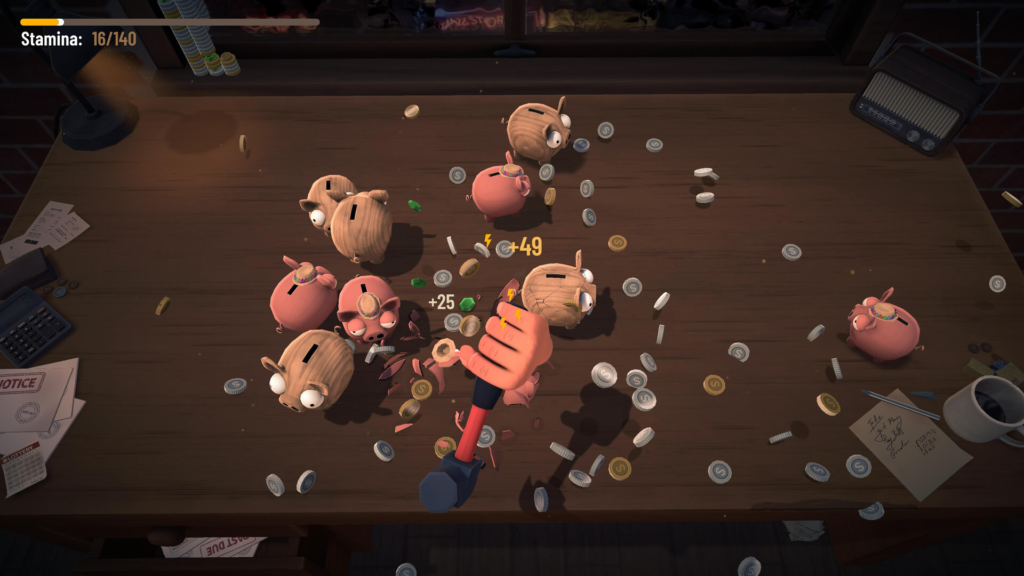
But also I think Bills Must Be Paid innovated with the “bill paying” mechanic (more on that in a second).
Overall, I still think incremental is still a great starter genre for indies who are mired in “dream game” development hell. Take a break from your “dream game” and make an incremental. Learn Steam. Get over your fear of launching. The fanbase loves incrementals. But it is clear that the minimum bar to basic success is rising. You need higher quality art assets and you need to add more novel mechanics on top of the core genre.
And if you fail, you only wasted 3-6 months and you can get back to your “dream game” refreshed. Plus you can write a scathing post on Reddit about how bad it is to chase trends and only true devs make dream games where passion is the only metric you should be min-maxing.
Where are incremental games headed?
They’re evolving like every genre does, players will expect more quality and more uniqueness, because the baseline keeps rising. That definitely influenced how we made the game. The bill mechanic, the shop with new hammers and gadgets, coin collection, prestige, minigames all of that came from wanting to give the player “more” than just numbers going up. The goal was to make something that is simple, but stands out a bit.
- Mike
Analysis
The bill mechanic is really clever. It is almost like a forced “prestige” system where a bill is due every couple days. If you don’t have enough money your game is over in what is basically a forced “prestige.” It really adds a layer of risk/reward where you take a gamble to buy extra upgrades even though you might not have enough money by the time the bill is due. The feature definitely adds more excitement to a genre that is famous for being vegetatively chill.
Marketing
Launch day was right after Halo: Campaign Evolved, were they worried?
“No worries, because of the Personal Calendar, and we thought that if someone buys a $60 game they probably don’t care much to spend another $5 on a different “lighter” game. The only real cost we saw was one fewer spot in Popular New Releases. Can’t say anything about effects.“
- Mike
Analysis
I track the history of every game in Popular New Releases (formerly called New & Trending) and Both Orc Problem and Bills Must Be Paid spent only 1 day each in the Popular New Releases. Both of them also spent only 1 day in Popular Upcoming. That is very typical for games and I don’t think that is the Halo effect.
Indie competition with Sir We Have an Orc Problem?
Honestly, not much. Both are incremental, but the visuals and sub-genre (Orc is TD at its core) mean slightly different audiences.
- Mike
He is right. Game Discover Co has a neat feature where they scrape public Steam accounts to estimate how much of an overlap there is between games.
I looked up the overlap of all 3 games I am covering this week:
- 6.72% of the Bills Must Be Paid audience also played Orc Problem.
- 5.46% of the Bills Must Be Paid audience also played How Many Dudes?
🛑STOP! Think about that! STOP! 🛑
Three niche indie games on Steam released within 1 day of each other and launched against the AAA shooter Halo. ANNNND two of the games are basically in the same genre. AND YET! All 3 of the indie games did very well and EVEN STILL they only overlap with each other by about 5%-7%.
🛑STOP! Think about that! STOP! 🛑
At indie scale, Steam is an infinitely deep well of players. You can NEVER over-expose your game. The thing that is holding your game back is not the competition, it is how exciting and interesting your game is to people, and by extension whether that makes your game attractive enough for Steam to keep promoting you. Abolish a Malthusian mindset towards Steam.
To read the other posts in my 1 week in the indie Golden Age see these:
Watch their great post mortem here:
And reddit post here: